Hook
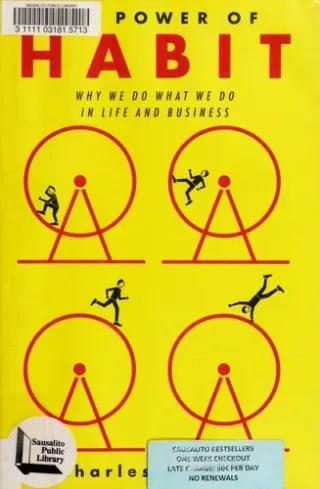
Nearly half of what you do every day is not a conscious decision — it is a habit. Charles Duhigg pulls apart the machinery behind those automatic behaviors and shows you exactly how to rewire them.
What It’s About
The Power of Habit is organized around a deceptively simple framework: the habit loop. Every habit, Duhigg argues, consists of three components — a cue that triggers the behavior, a routine that follows, and a reward that reinforces it. Understanding this loop is the key to changing habits, whether you are trying to stop snacking at your desk or trying to transform an entire organization’s culture.
The book moves through three scales of habit. Part one covers individual habits, using case studies that range from a man who lost his memory but could still form new habits (revealing just how deeply automatic these patterns are) to how Alcoholics Anonymous works by keeping the cue and reward the same while changing the routine. Part two examines organizational habits — the keystone habits that companies like Alcoa used to transform their entire culture by focusing obsessively on a single metric (worker safety, in that case) that cascaded into improvements everywhere else. Part three zooms out further to societal habits, exploring how the Montgomery Bus Boycott succeeded through the same mechanisms that drive individual behavior change.
Duhigg is a reporter at heart, and it shows. The book reads more like long-form journalism than a self-help manual. Each chapter is built around a compelling narrative — real people with real struggles — and the science is woven into the stories rather than dumped in blocks. This makes the book genuinely enjoyable to read, not just useful. The research is solid, drawing from neuroscience, psychology, and behavioral economics, but Duhigg never lets the academic material slow down the storytelling.
Key Takeaways
The most actionable insight is that you cannot simply eliminate a bad habit. You have to replace it. The cue and the reward are deeply encoded in your brain, and trying to fight them with willpower alone is a losing battle. Instead, the strategy is to identify what cue triggers the habit, figure out what reward you are actually craving (which is often not what you think), and then insert a new routine that delivers a similar reward. This reframing turns habit change from a battle of willpower into a design problem, which is far more solvable.
The concept of keystone habits is equally powerful. These are habits that, when changed, create a ripple effect that transforms other behaviors. Exercise is a classic example — people who start exercising regularly tend to eat better, sleep better, and be more productive at work, even though nobody told them to change those things. For organizations, identifying and targeting keystone habits can produce outsized returns relative to the effort invested. Duhigg makes a convincing case that the difference between successful change efforts and failed ones often comes down to whether they targeted the right habit.
The Verdict
A masterclass in making behavioral science both accessible and actionable — this is the rare book that genuinely changes how you see your own daily life.