Hook
The best teams in the world are not built from the best individuals. They are built from a set of specific, learnable behaviors that create belonging, vulnerability, and shared purpose — and Daniel Coyle cracks the code on exactly how.
What It’s About
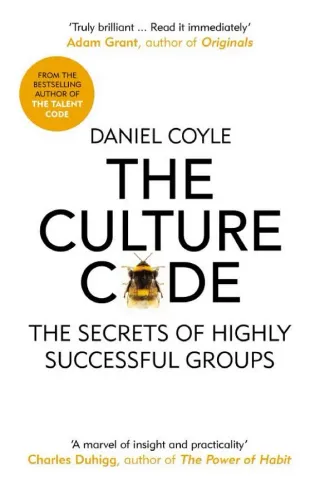
The Culture Code examines what makes certain groups — Navy SEALs, Pixar, the San Antonio Spurs, a gang of jewel thieves — dramatically more effective than others. Daniel Coyle spent four years visiting and studying some of the most successful organizations on the planet, and he distills his findings into three foundational skills: building safety, sharing vulnerability, and establishing purpose.
Building safety is about creating an environment where people feel they belong and that their voice matters. Coyle shows how small, seemingly trivial behaviors — body language, proximity, eye contact, turn-taking in conversation — send powerful signals that either invite connection or shut it down. He introduces the concept of “belonging cues,” micro-signals that tell our ancient brains whether we are safe in a group. Teams that flood their environment with belonging cues outperform teams of individually talented people who lack that cohesion.
Sharing vulnerability is the counterintuitive second skill. Coyle demonstrates that the strongest teams are not the ones where everyone projects confidence — they are the ones where people admit mistakes, ask for help, and say “I don’t know.” This vulnerability loop, where one person’s openness triggers openness in others, creates the trust necessary for real collaboration. The third skill, establishing purpose, is about creating clear narratives and priorities that align everyone’s efforts. Coyle shows how the best leaders use simple, repeated signals to keep their teams focused on what matters most.
Key Takeaways
The most actionable insight is that culture is not about who you are — it is about what you do. The behaviors Coyle identifies are concrete and replicable: overcommunicate belonging, embrace discomfort in conversations, use catchphrases to reinforce priorities, and make sure everyone knows how their work connects to the group’s mission. These are not personality traits; they are habits that any leader or team member can adopt.
Coyle also makes a powerful case that vulnerability is not weakness but a prerequisite for high performance. The organizations he profiles have all found ways to institutionalize honest feedback and mutual accountability. This runs against the instinct to project strength, but the evidence is overwhelming: teams that practice vulnerability together innovate faster, recover from setbacks more quickly, and sustain high performance over time.
The Verdict
The Culture Code is one of the most practical and well-researched books on team dynamics available — a must-read for anyone who leads, manages, or works alongside other humans.