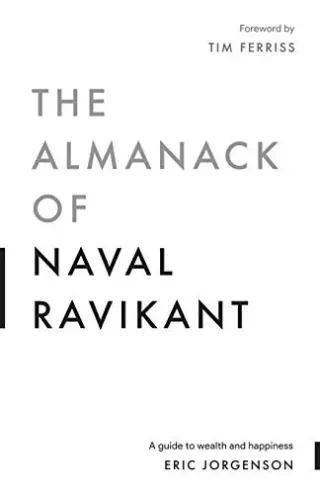
Hook
What if everything you thought you knew about building wealth and finding happiness was unnecessarily complicated? Naval Ravikant has spent decades distilling life’s biggest questions into surprisingly simple principles — and this book captures all of them.
What It’s About
The Almanack of Naval Ravikant is not a book Naval wrote himself. It is a carefully curated collection of his wisdom, pulled from tweets, podcast interviews, and essays by author Eric Jorgenson. The result reads less like a traditional book and more like a modern-day philosophical text — part Marcus Aurelius, part Charlie Munger, delivered in the punchy cadence of someone who grew up on the internet.
The book is split into two major sections: wealth and happiness. In the first half, Naval lays out his framework for building wealth without relying on trading time for money. He draws sharp distinctions between wealth and status, argues for the importance of specific knowledge that cannot be taught in school, and makes a compelling case for leverage through code, media, and capital. His ideas on accountability, judgment, and ownership feel genuinely fresh, especially for anyone stuck on the corporate treadmill wondering if there is another way.
The second half tackles happiness — not as some vague aspiration, but as a skill that can be developed. Naval speaks openly about his own struggles with anxiety and overthinking, and shares the habits and mental models that helped him find peace. He explores meditation, presence, the nature of desire, and why most of our suffering is self-created. This section is more contemplative and personal, and it balances the more tactical first half beautifully. Together, they form a remarkably cohesive philosophy for living well in the modern world.
Key Takeaways
Naval’s central insight is that both wealth and happiness are learnable skills, not matters of luck or genetics. For wealth, the formula boils down to owning equity, developing unique knowledge, and using leverage wisely. He is adamant that you should not rent out your time, and that the biggest returns come from being authentically yourself in ways that are difficult to replicate. For happiness, his advice is equally direct: desire less, stay present, and treat your mind like a muscle that needs training.
What makes this book stand out is its density of insight per page. There is no filler here. Each chapter is short and punchy, often just a page or two, making it the kind of book you can flip open at random and walk away with something useful. It is also refreshingly honest — Naval does not pretend to have all the answers, and he frequently contradicts the self-help industrial complex. The book rewards re-reading, and many of its ideas have a way of becoming more meaningful over time.
The Verdict
A rare book that manages to be both deeply philosophical and immediately practical — if you only read one book on wealth and happiness this year, make it this one.