Hook
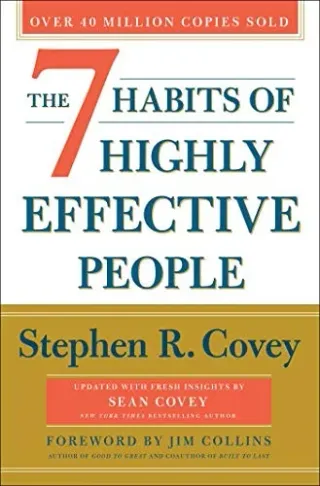
Decades before the productivity-hack era, Stephen Covey wrote the definitive guide to personal effectiveness — and it has nothing to do with shortcuts. This is the book that made “paradigm shift” a household phrase and convinced millions that character, not personality, is the foundation of lasting success.
What It’s About
The 7 Habits is built on a distinction Covey draws between the “personality ethic” and the “character ethic.” The personality ethic — think positive thinking, communication techniques, influence strategies — dominates modern self-help. But Covey argues it is ultimately superficial. Real effectiveness comes from aligning yourself with timeless principles like integrity, fairness, and human dignity. The seven habits are his framework for doing exactly that.
The first three habits focus on what Covey calls “private victory” — the inner work of becoming self-directed. Habit 1, “Be Proactive,” establishes that you are responsible for your responses to life’s circumstances. Habit 2, “Begin with the End in Mind,” asks you to define your personal mission and values. Habit 3, “Put First Things First,” provides a time-management framework centered on importance rather than urgency. Together, these habits move you from dependence to independence.
The next three habits address “public victory” — the art of working effectively with others. Habit 4, “Think Win-Win,” reframes negotiation as a search for mutual benefit. Habit 5, “Seek First to Understand, Then to Be Understood,” is Covey’s case for empathic listening. Habit 6, “Synergize,” argues that creative collaboration can produce outcomes greater than the sum of individual efforts. The final habit, “Sharpen the Saw,” is about continuous self-renewal across physical, mental, social, and spiritual dimensions.
Key Takeaways
What makes this book endure is its insistence on principles over tactics. Covey’s framework is not about getting more done in less time — it is about ensuring that what you do actually matters. The Eisenhower-style matrix in Habit 3, which distinguishes between urgent and important tasks, remains one of the most useful mental models in personal productivity. And Habit 5’s emphasis on listening before prescribing is advice that most people need to hear roughly once a week for the rest of their lives.
The book can feel dense and occasionally preachy, and Covey’s language sometimes leans toward corporate jargon. But the underlying framework is genuinely robust. If you strip away the dated examples and focus on the architecture of the seven habits, you will find a system that holds up remarkably well against everything published in the self-improvement space since 1989.
The Verdict
This is one of those rare self-help books that deserves its enormous reputation — a principled, systematic guide to becoming the kind of person who does not need self-help books anymore.