Hook
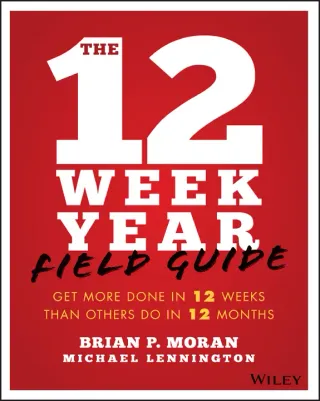
What if you could accomplish your annual goals in just twelve weeks? Brian Moran argues that the traditional calendar year is the enemy of execution, and that compressing your timeline is the key to extraordinary results.
What It’s About
The 12 Week Year challenges one of the most deeply ingrained assumptions in business and personal planning: that a year is the right unit of time for goal-setting. Moran’s central argument is that annualized thinking creates a dangerous sense of false comfort. When you have twelve months to hit a target, the first few months tend to drift by without urgency. Then panic sets in around October, and you either scramble or quietly lower your expectations. Sound familiar?
The alternative Moran proposes is to treat every twelve-week period as its own complete year. You set goals for the period, break them into weekly plans, track your execution daily, and hold a review at the end of the twelve weeks before starting the next cycle. The compressed timeline creates natural urgency and makes procrastination far more costly. There is nowhere to hide when your “year” ends in March.
The book covers the mechanics of this system in detail: how to create a 12-week plan, how to structure your weeks, how to measure lead indicators rather than lag indicators, and how to build accountability through weekly scoring. Moran also addresses the psychological side, discussing the importance of a compelling vision and the discipline required to maintain execution over time. The system is straightforward and does not require any special tools or software — just a plan, a weekly scorecard, and the willingness to be honest with yourself about whether you are doing the work.
Key Takeaways
The most powerful idea in this book is the distinction between activity and execution. Most people confuse being busy with making progress. The 12-week framework forces you to identify the specific actions that actually move the needle and then measure whether you are completing them each week. Your execution score — the percentage of planned tasks you actually completed — becomes the number that matters, not the outcome itself. If you execute consistently, the results follow.
The system also reveals how much time we waste when deadlines feel distant. By creating artificial but meaningful urgency, you train yourself to operate with the focus and intensity that most people only summon in a crisis. It is not about working harder; it is about working with greater intentionality over shorter bursts. The book could be shorter — some of the concepts are repeated more than necessary — but the core framework is sound and immediately applicable.
The Verdict
A simple but effective productivity framework that works especially well for professionals and entrepreneurs who struggle with annual planning — not groundbreaking, but the compressed timeline concept alone can meaningfully change how you approach your goals.