Hook
The founder of the world’s largest hedge fund spent a lifetime codifying the rules by which he makes every decision — and the resulting book is equal parts autobiography, management manual, and operating system for rational thinking.
What It’s About
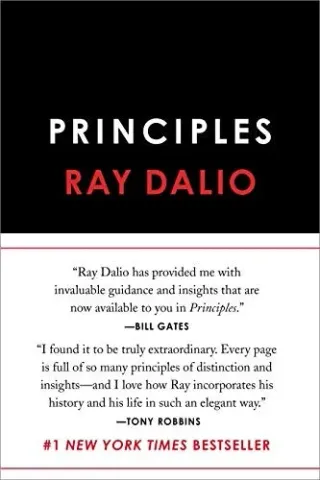
Ray Dalio built Bridgewater Associates into one of the most successful investment firms in history, and along the way he developed an extraordinarily systematic approach to decision-making. This book is his attempt to share that system. It’s divided into three parts: a brief autobiography, a section on “Life Principles,” and a longer section on “Work Principles.” The autobiographical section is essential context — it shows how Dalio’s spectacular failures (including nearly going bankrupt in 1982) taught him the humility and systematic thinking that became his foundation.
The Life Principles section lays out Dalio’s framework for pursuing truth and achieving goals. At its core is a five-step process: set clear goals, identify the problems standing in your way, diagnose those problems to their root causes, design plans to overcome them, and execute those plans with discipline. This sounds straightforward, but Dalio adds layers of nuance about radical open-mindedness, the importance of understanding your own blind spots, and the value of “believability-weighted decision-making” — giving more weight to the opinions of people with proven track records in the relevant domain.
The Work Principles section is where the book gets both most distinctive and most polarizing. Dalio describes Bridgewater’s culture of radical transparency, where every meeting is recorded, feedback is constant and direct, and employees are rated on dozens of attributes that are visible to everyone. He argues that this level of transparency, while uncomfortable, produces better decisions and stronger organizations. Whether you find this inspiring or dystopian will say a lot about your own temperament. The book is long — nearly 600 pages — and can feel repetitive, but it rewards patient readers with a genuinely comprehensive system for thinking more clearly.
Key Takeaways
The most powerful idea is the concept of “pain plus reflection equals progress.” Dalio argues that mistakes and failures are not just inevitable but essential, provided you develop the habit of examining them honestly and extracting lessons. This requires radical open-mindedness — the willingness to set aside your ego and consider that you might be wrong, especially when the evidence contradicts your beliefs.
The believability-weighted decision-making framework is another standout concept. Rather than treating every opinion equally or defaulting to the highest-ranking person in the room, Dalio advocates for explicitly weighting input based on each person’s demonstrated competence in the relevant area. This isn’t about hierarchy — it’s about evidence. A junior analyst with deep expertise in a specific market should carry more weight on that topic than the CEO. Implementing this in practice requires tools and cultural norms that most organizations lack, but the underlying logic is sound and applicable even in informal settings.
The Verdict
An ambitious and deeply substantive book that offers a genuine operating system for life and work — it demands patience and an open mind, but the payoff is a more rigorous way of thinking about decisions, organizations, and personal growth.