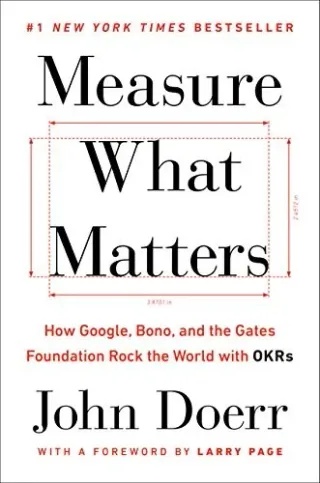
Hook
The goal-setting system that powered Google from a garage startup to a trillion-dollar company didn’t originate in Silicon Valley — it was born at Intel in the 1970s, and legendary venture capitalist John Doerr has been spreading it ever since.
What It’s About
John Doerr learned the OKR framework — Objectives and Key Results — from Andy Grove at Intel, and he’s spent the decades since introducing it to companies like Google, the Gates Foundation, and Bono’s ONE Campaign. The system is elegantly simple: you define a clear, inspiring Objective (what you want to achieve), then attach a small number of measurable Key Results (how you’ll know you’ve achieved it). That’s it. No elaborate strategic planning documents, no complex dashboards. Just clarity about where you’re going and how to track progress.
The book walks through the framework using a mix of Doerr’s own stories and case studies from organizations that have adopted OKRs. You’ll read about how Google used them to build Chrome into the world’s dominant browser, how the Gates Foundation applied them to global health challenges, and how smaller companies used them to stay focused during periods of rapid growth. Doerr also covers related concepts like CFRs (Conversations, Feedback, Recognition) as a modern replacement for annual performance reviews, and the importance of stretching beyond what feels comfortable.
Where the book shines is in making a management framework feel genuinely accessible. Doerr writes with the enthusiasm of someone who has watched this system transform organizations for decades, and the case studies provide enough variety that readers from different industries can find relevant examples. Where it’s weaker is in occasionally feeling like a greatest-hits tour of Silicon Valley success stories. The framework itself is straightforward enough that you could explain it in a few pages, so some of the book’s length comes from repetition and cheerleading rather than deeper analysis.
Key Takeaways
The power of OKRs lies in their simplicity and transparency. When everyone in an organization can see what everyone else is working toward, alignment happens naturally. Doerr emphasizes that OKRs should be public, that roughly 60% should be set bottom-up rather than top-down, and that ambitious “stretch” goals should be encouraged even if they’re not fully achieved. The system works because it forces hard choices about priorities — if everything is important, nothing is.
The most practical advice is around implementation: keep the number of objectives small (three to five per cycle), make key results specific and time-bound, separate OKRs from compensation to encourage risk-taking, and review them regularly rather than setting and forgetting. Doerr is also honest that OKRs aren’t magic — they require discipline, transparency, and a willingness to adapt.
The Verdict
A solid introduction to one of the most widely adopted goal-setting frameworks in modern business, though readers looking for depth beyond the basics may find it more inspirational than instructional.