Hook
The leaders who last are not the ones who find the right formula and stick with it — they are the ones who keep changing the formula before the world forces them to.
What It’s About
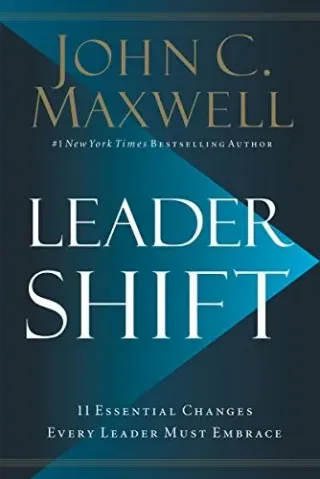
John C. Maxwell, one of the most prolific voices in leadership literature, uses Leadershift to address what he sees as the defining challenge of modern leadership: the ability to make changes that positively enhance both personal and organizational growth. The book is structured around eleven “leadershifts” — intentional changes in thinking, behavior, and focus that Maxwell argues every leader must make to remain effective.
These shifts range from the foundational to the aspirational. Maxwell advocates moving from soloist to conductor, from goals to growth, from perks to price, from pleasing people to challenging people, and from maintaining to creating, among others. Each shift is presented as a chapter-length essay, blending Maxwell’s personal experiences with observations from his decades of coaching leaders across industries. The tone is conversational and encouraging, the kind of motivational wisdom that Maxwell’s enormous readership has come to expect.
The book’s most useful material arrives when Maxwell gets specific. His discussion of moving from ladder climbing to ladder building — shifting focus from personal advancement to creating opportunities for others — is genuinely insightful. Similarly, his exploration of the shift from directing to connecting acknowledges that modern leadership is less about issuing commands and more about fostering relationships, trust, and shared purpose. When Maxwell draws on concrete examples from his own failures and course corrections, the material feels earned and authentic.
Key Takeaways
The overarching message is that adaptability is not a nice-to-have for leaders but a survival skill. Maxwell emphasizes that the capacity for continuous reinvention is what separates leaders who remain relevant from those who peak and fade. He makes a strong case that growth and comfort rarely coexist, and that leaders must be willing to trade the familiar for the uncertain if they want to keep improving.
It is worth noting that Maxwell’s style leans heavily on anecdote and aphorism rather than research and data. Readers coming from the evidence-based school of management may find the book light on rigor. However, for those who respond to inspirational storytelling and practical maxims, the book delivers plenty of material to reflect on. The chapters on moral authority and the shift from career to calling are particularly resonant for leaders in mid-career who are wrestling with questions of purpose.
The Verdict
Leadershift is a solid addition to Maxwell’s extensive catalog — not groundbreaking, but full of practical wisdom for leaders who recognize that standing still is the most dangerous thing they can do.