Hook
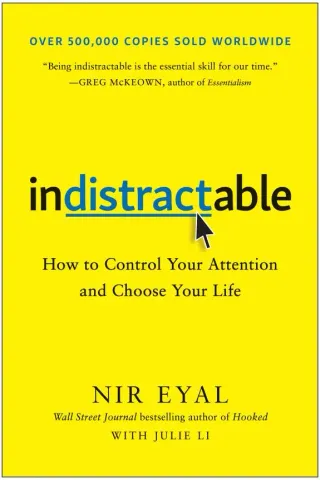
The author of Hooked — who literally wrote the book on making technology addictive — returns with a guide to reclaiming your attention. It is part confession, part toolkit, and a surprisingly honest reckoning with the distraction crisis he helped create.
What It’s About
Indistractable is Nir Eyal’s answer to the problem he explored from the opposite side in his first book, Hooked. Where that book taught product designers how to build habit-forming technology, this one teaches individuals how to resist it. But Eyal’s thesis is more nuanced than “put your phone down.” He argues that distraction is not primarily a technology problem — it is a human problem rooted in our inability to deal with internal discomfort.
The book is organized around a four-part model. First, master internal triggers: understand that most distraction begins not with a notification but with an uncomfortable feeling — boredom, anxiety, loneliness — that we seek to escape. Second, make time for traction: use “timeboxing” to plan your day in advance so that you have a clear definition of what being on-track looks like. Third, hack back external triggers: audit your phone, email, and work environment to reduce unnecessary interruptions. Fourth, prevent distraction with pacts: use commitment devices (price pacts, effort pacts, identity pacts) to lock in your intentions.
Eyal is careful to avoid the moralizing tone that plagues many books about attention. He does not demonize technology or social media wholesale. Instead, he provides a framework for deciding which triggers are serving you and which are derailing you. The book includes specific chapters on raising indistractable children and building indistractable workplaces, which broadens its appeal beyond individual productivity.
Key Takeaways
The most valuable reframe is that the opposite of distraction is not focus — it is traction. Traction is any action that pulls you toward what you want to be doing. Distraction is anything that pulls you away. This distinction makes the concept personal rather than prescriptive. Your traction and your distraction are defined by your own values and schedule, not by someone else’s productivity system.
The emphasis on internal triggers is what separates this book from simpler digital detox advice. Eyal argues that if you do not address the discomfort driving your distraction, you will simply find new ways to distract yourself even if you delete every app on your phone. The timeboxing technique he advocates is practical and effective: rather than working from a to-do list (which provides no constraint on time), you allocate every minute of your day to a specific activity, creating a template you can measure yourself against.
The Verdict
Indistractable offers a mature, non-judgmental framework for managing attention in a world designed to steal it — stronger on the psychological roots of distraction than on quick fixes, which is exactly where most people need the help.