Hook
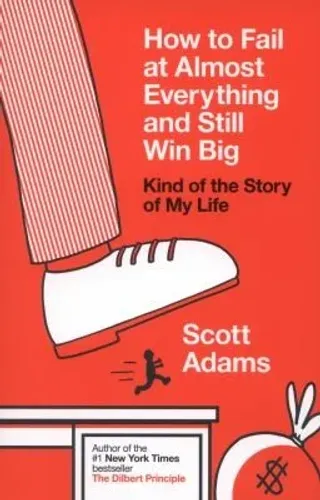
The creator of Dilbert failed at more ventures than most people ever attempt — and argues that serial failure was exactly the point. Scott Adams makes a counterintuitive case that goals are for losers, passion is overrated, and systems beat willpower every time.
What It’s About
This is part memoir, part self-help book, and part contrarian manifesto. Adams walks through his long list of failed business ventures — a computer game, several restaurants, a meditation app, a food company, and more — to illustrate a central thesis: success comes not from setting goals and chasing them with passion, but from building systems that increase your odds of getting lucky. A goal is a specific outcome you either achieve or fail at. A system is a repeatable process that puts you in a better position regardless of any single outcome.
Adams organizes his advice around the concept of personal energy management. He argues that your most important job is to manage your own energy — through diet, exercise, sleep, and choosing activities that energize rather than drain you. From there, he layers on the idea of “talent stacking”: rather than trying to become world-class at one thing, combine several complementary skills where you are merely good. Adams credits his own success to being a decent artist, a decent writer, and a decent humorist who worked in business — none of those skills alone was exceptional, but the combination was rare and valuable.
The book also covers topics like the psychology of persuasion, the importance of personal appearance, and how to manage your own psychology when things go wrong. Adams is refreshingly honest about the role of luck, though he is careful to argue that you can improve your luck by exposing yourself to more opportunities and by building a diverse skill set.
Key Takeaways
The systems-over-goals framework is the book’s standout contribution. It reframes failure as data collection rather than defeat, which is genuinely useful for anyone who has ever abandoned a New Year’s resolution. The talent-stacking idea is similarly powerful — it gives permission to people who are not prodigies to build unique value through unusual combinations of ordinary skills.
Where the book stumbles is in its occasional overconfidence. Adams sometimes presents personal anecdotes as universal principles, and his advice on diet and nutrition lacks scientific rigor. The writing is breezy and entertaining but can feel scattered. Still, the core ideas — manage your energy, build systems, stack complementary skills — are practical and hold up well.
The Verdict
A refreshingly honest and unconventional guide to personal success that is strongest when it challenges conventional wisdom and weakest when it strays into areas outside the author’s expertise.