Hook
You do not have a willpower problem with your phone — you have a philosophy problem, and the tech companies are winning because you have not articulated yours.
What It’s About
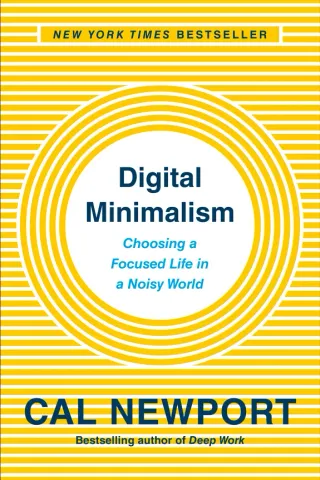
Cal Newport, the computer science professor who gave us Deep Work, turns his analytical mind to a broader target in Digital Minimalism: the way digital technologies have colonized our attention, our social lives, and our leisure time. But this is not another book telling you to put down your phone. Newport argues that the piecemeal approach — turning off a notification here, deleting an app there — is doomed to fail because it treats symptoms rather than causes. What you need instead is a philosophy of technology use.
That philosophy is digital minimalism, which Newport defines as a practice in which you focus your online time on a small number of carefully selected activities that strongly support things you value, and then happily miss out on everything else. The key word is “happily.” Newport is not preaching digital abstinence or technophobia. He is making the case that intentional engagement with technology is both more satisfying and more productive than the default state of compulsive scrolling and reflexive checking.
The book’s most practical section outlines a thirty-day “digital declutter” process. Participants step away from all optional technologies for a month, then reintroduce them one at a time, keeping only those that pass a strict test: does this technology directly support something I deeply value, and is it the best way to support that value? Newport documents the experiences of hundreds of people who went through this process, and the patterns are striking. Most discovered that they missed far fewer services than they expected, and that the time they reclaimed could be filled with activities that were dramatically more fulfilling.
Key Takeaways
Newport’s most important contribution is reframing the conversation from self-control to values. The problem is not that you are weak-willed; the problem is that you have never deliberately decided what role technology should play in your life. Without that intentional framework, you are easy prey for the army of attention engineers in Silicon Valley who have designed their products to be maximally addictive.
The book also offers a robust defense of analog leisure — solitary walks, face-to-face conversation, hands-on craftsmanship, and other activities that social media has quietly displaced. Newport argues, with strong evidence from psychology and sociology, that these high-quality leisure activities provide a depth of satisfaction that passive digital consumption simply cannot match. The chapter on reclaiming conversation, in particular, makes a powerful case that replacing real human interaction with likes, comments, and text messages has made us lonelier, not more connected.
The Verdict
Digital Minimalism is not anti-technology but pro-intention — a clear-eyed, practical guide for anyone who suspects they are spending their attention on things that do not actually make their life better.