Hook
Everything you’ve been told about success — play by the rules, be well-rounded, never quit — might be spectacularly wrong, and Eric Barker has the research to prove it.
What It’s About
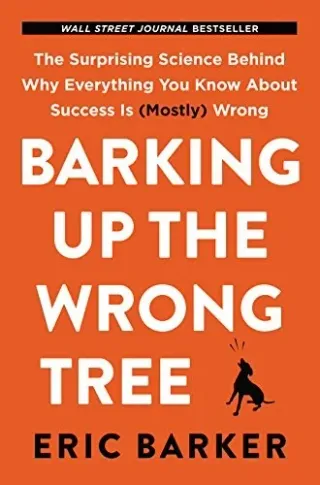
Eric Barker, the writer behind the popular blog of the same name, takes on the conventional wisdom about success and puts it under a scientific microscope. Each chapter examines a widely held belief — nice guys finish last, quitters never win, confidence is key — and explores what the research actually says. The answers are almost always more nuanced and more interesting than the bumper-sticker advice we grew up with.
The book’s structure is one of its greatest strengths. Barker presents each topic as a genuine debate, offering evidence for both sides before arriving at a more sophisticated conclusion. Should you play it safe or take risks? The answer depends on context, personality, and what you’re optimizing for. Do nice guys really finish last? The research shows they finish both first and last — the key is understanding when generosity pays off and when it gets exploited. Is grit always a virtue? Sometimes, but knowing when to quit is an equally important skill that gritty people often lack.
What makes the book genuinely enjoyable is Barker’s writing style. He’s funny, self-deprecating, and skilled at translating dense academic research into stories and analogies that stick. He draws on an impressive range of sources, from Navy SEALs to concert pianists to Genghis Khan, and weaves them together with a conversational energy that keeps the pages turning. The book covers a lot of ground — networking, work-life balance, confidence, morality, meaning — and while no single topic gets the deep treatment it might receive in a dedicated book, the breadth is part of the appeal. You get a survey of the science of success that challenges assumptions on nearly every page.
Key Takeaways
The most valuable insight running through the book is that context matters enormously. The traits and strategies that lead to success in one environment can lead to failure in another. Barker calls this “alignment” — the key is not to become a generic high-performer but to find or create environments where your specific strengths shine. An introvert shouldn’t try to become an extrovert; they should find roles and organizations that reward deep, focused work.
The chapter on quitting is particularly counterintuitive and useful. Barker argues that strategic quitting — knowing when to walk away from a dead end to pursue something with higher potential — is a vastly underrated skill. The sunk cost fallacy keeps people locked into careers, relationships, and projects long past the point of diminishing returns. Knowing when to quit and when to persist is, he argues, one of the most important meta-skills you can develop.
The Verdict
A smart, entertaining survey of the science behind success that will make you question your assumptions — ideal for readers who want their self-help backed by evidence and delivered with humor.